Introduction
Fès is not Marrakech. For travelers seeking a riad, that difference is everything. The medina of Fès — Fès el-Bali — is a UNESCO World Heritage site and one of the largest car-free urban zones on the planet, a labyrinth of narrow lanes, covered souks, and centuries-old madrasas. A riad in Fès sits inside this living history, and choosing whether to stay within the old walls or outside them shapes your entire experience.
This guide breaks down what a riad actually is, how a Fès riad differs from the Marrakech version, and why location — inside the medina versus outside — matters more than any other factor. You'll also find a practical framework for comparing options, a step-by-step booking process, and an honest look at the best areas of the medina to stay.
Use this guide as a decision tool. Read the sections that match your priorities — whether that's accessibility, authenticity, or the level of service you want — and come back to the comparison table when you're shortlisting. Your Fès accommodation should fit the way you want to experience the city, not the other way around.
Quick Answer: A riad in Fès is a traditional Moroccan guesthouse with an interior courtyard, converted from a historic house. The key decision is location: staying inside the medina offers unmatched atmosphere, while staying outside offers easier access and parking.
Key Takeaways
- A riad in Fès is not a hotel — it's a traditional Moroccan house centered around a courtyard, converted for guest accommodation.
- Location is the single most important factor: inside the medina vs. outside the old walls.
- Every riad is unique; there is no standard "product" — layout, size, and amenities vary dramatically.
- The best riads in Fès are often family-run with a focus on hospitality over luxury.
- Booking directly is usually more advantageous than using an OTA.
The Complete Answer: What Is a Riad in Fès?
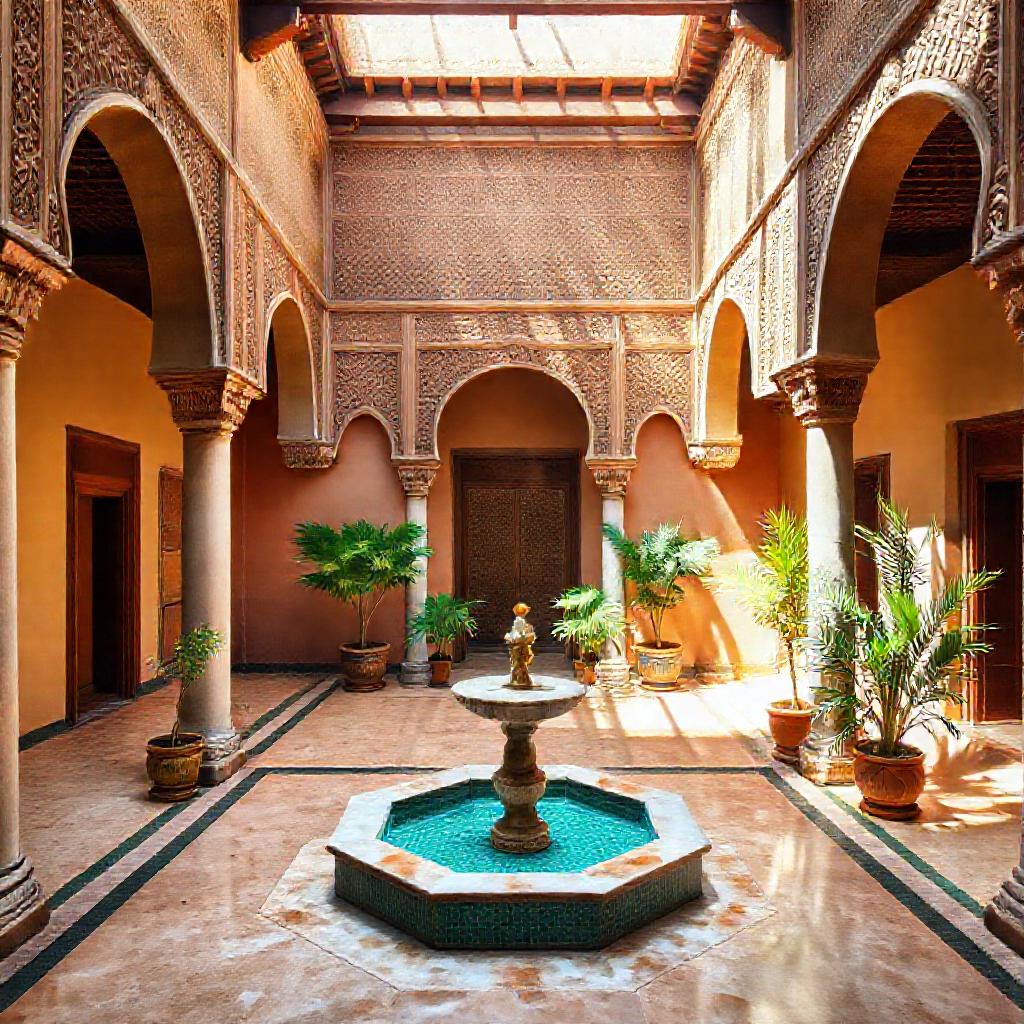
A serene view of a riad courtyard in Fès, highlighting traditional Moroccan architecture, water, and greenery.
A riad is a traditional Moroccan house organized around a central open-air courtyard. In Fès, these houses are often centuries old, built by wealthy families who prized privacy and cool air. The courtyard is the heart of the home — a space for light, water, and greenery — and the rooms open onto it from every side.
Definition: A riad is a traditional Moroccan house or palace with an interior courtyard, typically featuring a garden or fountain, that has been converted for guest accommodation.
Defining the Riad: Architecture and Purpose
The classic layout is simple: rooms arranged around a central open-air courtyard. The courtyard is usually paved with marble or zellige tilework and often features a fountain at its center. Around the courtyard, you'll find carved plaster arches, cedar wood doors and ceilings, and intricate tilework that has been a hallmark of Moroccan architecture for centuries.
The distinction between a riad, a dar, and a fondouk is worth understanding. A dar is a traditional house similar to a riad but typically smaller, without the central garden or fountain that defines a true riad. A fondouk is a historic inn or caravanserai, built to house merchants and their goods. In modern Fès, many riads and dars have been adapted as guesthouses, while some fondouks have been restored as hotels.
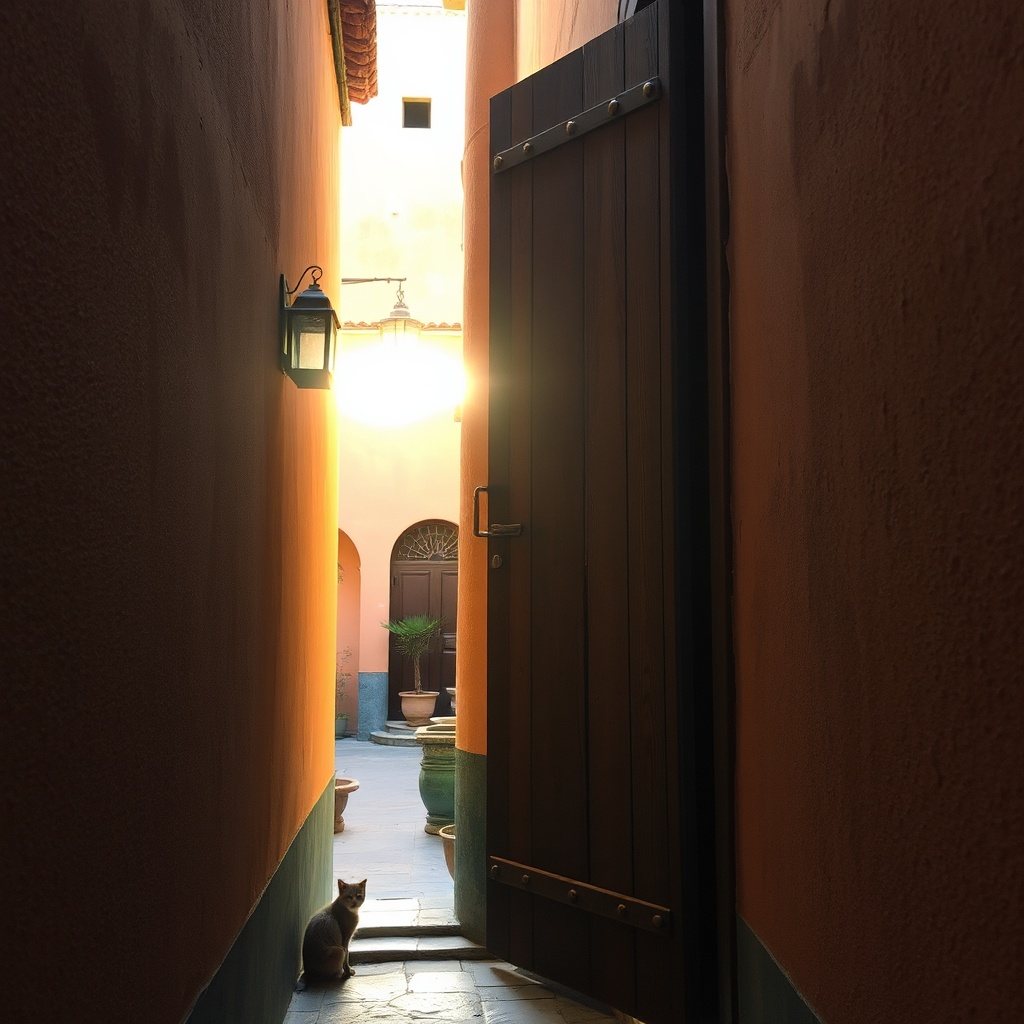
An atmospheric exterior shot of a riad entrance in the Fès medina, evoking the city's hidden lanes and historic character.
How a Fès Riad Differs from a Marrakech Riad
Scale is the first difference you'll notice. Riads in Fès tend to be smaller and more intimate than their Marrakech counterparts. This is partly a reflection of the medina's dense urban fabric — there is less room to build, so the houses are more compact and often more personal.
The architectural style also carries a distinct Andalusian influence. Fès was shaped by waves of Andalusian refugees, and the city's medina reflects that heritage in its tilework, woodwork, and the layout of its quarters. The Andalusian quarter, in the southern part of the medina, is a living example of this influence.
Location context matters too. The medina of Fès is a UNESCO World Heritage site with an urban fabric that has remained largely intact for centuries. It is not a museum — people live and work here — and that living quality gives a Fès riad a depth of atmosphere that is hard to find elsewhere.
The Modern Riad Experience
Staying in a riad today means traditional architecture with contemporary comforts. You can expect a blend of original features — zellige, carved plaster, cedar wood — with modern beds, en-suite bathrooms, and Wi-Fi. The best riads in Fès are often family-run, with the owner or a manager on hand to arrange everything from breakfast to guided tours.
The riad plays a central role in Fès's tourism ecosystem. It is not just a place to sleep; it's a gateway to the medina. Many riads offer breakfast on the courtyard or rooftop terrace, and some provide access to a hammam spa, cooking classes, or airport transfers. The level of service varies widely, so it's always worth asking what's included before you book.
Why Location Inside the Medina Matters More Than Anything
The single most important decision when booking a riad in Fès is location. Inside the medina, you're immersed in the historic center. Outside, you're in the modern city. These are two very different experiences.
Quick Answer: Stay inside the medina for authentic atmosphere and immediate access to landmarks. Stay outside — in the Ville Nouvelle — if you need easy parking, wider streets, or have mobility concerns.
The Fès Medina: A Living Maze
The medina of Fès is a practical reality you need to prepare for. Streets are narrow, often no wider than a few feet, and cars are not allowed. Navigating it is part of the experience, but it takes time. The medina is a maze by design, and even locals sometimes take the long way around.
Location affects how easily you can reach the landmarks. If you're staying near Bab Boujloud, the Blue Gate, you're close to the main food street and the entrance to the medina. The Bou Inania Madrasa is a short walk away. If you're deep in the medina, you'll walk farther, but you'll also be farther from the crowds.
The trade-off is real: deep-medina authenticity versus easier access. A riad tucked into a quiet lane offers a more intimate experience, but you'll need to navigate the maze every time you leave. A riad near the main gates is easier to find and reach, but you'll hear more foot traffic.
Accessibility and Transfer Logistics
Most riads are located within walking distance of the main gates — Bab Boujloud in the north and Bab Rcif in the south. This is a practical consideration because the medina is car-free. When you arrive, you'll need to walk the last stretch.
The reality of luggage is important. If you have large suitcases, you'll need a porter or a well-planned route. Many riads can arrange a porter to meet you at the nearest gate, and it's worth asking about this before you arrive. The medina's lanes are uneven and often stepped, so a porter is not a luxury — it's a necessity for most travelers.
To reach your riad from Fès–Saïss Airport, you'll take a taxi into the city. The airport is a short drive from the medina — roughly half an hour. Once you reach the nearest gate, you'll walk or be guided to your riad. Ask your riad about transfer arrangements in advance; many can organize a pickup.
Choosing Between the Medina and the Ville Nouvelle
The Ville Nouvelle is Fès's modern city, built during the French protectorate. It has wider streets, parking, and all the conveniences of a 20th-century city. It also has very little of the historic charm that draws travelers to Fès.
The medina, by contrast, is authentic but less accessible. You'll walk everywhere, and you'll need to plan for luggage and transfers.
Who should stay where? If you're a culture-focused traveler who wants to wake up to the sounds of the medina, stay inside. If you have mobility issues, large luggage, or a car, the Ville Nouvelle might be a better base — you can always walk into the medina during the day. For most first-time visitors, however, the medina is the Fès experience.
The Anatomy of a Great Fès Riad: What to Look For
Not all riads are created equal. Understanding the key features can help you evaluate options quickly.
The Courtyard: The Heart of the Home
The central patio is the defining feature of a riad. It's an open-air space that brings light and air into the home, and it shapes the daily rhythm of your stay. Breakfast is served there in the morning, tea in the afternoon, and it's where you'll relax in the evening.
A great courtyard has a fountain, plants, and comfortable seating. The light is important — a courtyard that gets good sun will feel warm and inviting, while one that's shaded will feel cooler and more private. When you're looking at photos, pay attention to the courtyard. It's where you'll spend most of your time.
Amenities and Services: Beyond the Basics
A typical riad offers breakfast, Wi-Fi, and air conditioning or heating. These are standard in most guesthouses. Beyond that, the range of services varies.
The riad's staff plays a crucial role. In a family-run riad, the owner or manager is often the concierge, the cook, and the guide all in one. They can arrange hammam access, cooking classes, airport transfers, and guided tours of the medina. This personal service is one of the main reasons travelers choose riads over hotels.
Additional services to ask about include hammam access (some riads have their own spa), rooftop terraces (great for sunset views over the medina), and meal service. Not all riads offer all of these, so it's worth checking.
Rooms and Suites: Size, Privacy, and Comfort
Room types vary dramatically across riads. Some have a handful of rooms, each with its own character. Others have more standard suites. The size of the rooms depends on the original house — some riads have large, airy rooms, while others have more compact spaces.
Consider who you're traveling with. Families might need a larger suite or two connecting rooms. Couples often prefer a room that opens onto the courtyard, which tends to be quieter and more romantic. Street-facing rooms can be noisy, especially near the main gates, so it's worth asking for a courtyard-facing room if you're a light sleeper.
A Step-by-Step Guide to Booking the Right Riad in Fès
Booking a riad in Fès is a process, and following these steps will help you find the right one.
- Define your priorities. Location vs. luxury vs. authenticity. Decide what matters most before you start searching.
- Set your budget range. Establish what you're willing to spend per night. This will narrow your options quickly.
- Shortlist riads via multiple sources. Don't rely on just one booking platform. Check the riad's own website, review sites, and travel forums.
- Check the riad's exact location on a detailed map of the medina — not just the general area. Look at the nearest gate and the walking route.
- Read recent guest reviews for specific details on noise, cleanliness, and staff helpfulness. Recent reviews are more useful than older ones.
- Contact the riad directly to ask about accessibility, transfers, and any special requirements. This is also the best way to get a better rate.
- Confirm the booking policy. Ask about deposit, cancellation, and payment methods before you commit.
Quick Answer: Book a riad in Fès directly by contacting the owner. This gives you the best rate, lets you ask about accessibility and transfers, and often includes extras like breakfast or a porter.
Comparing Riad Options: A Practical Framework
To make the search easier, here's a framework for comparing riads by category. Keep in mind that categories are self-defined by the owners, so use this as a starting point, not a guarantee.
Comparing by Category: A Quick Reference Table
| Category | What It Prioritizes | Ideal For | Typical Location |
|---|---|---|---|
| Budget Riads | Affordability and basic comfort | Backpackers and short stays | Near main gates for easy access |
| Mid-Range Riads | Authenticity, personal service, and value | Couples and culture-focused travelers | Inside the medina, often near landmarks |
| Luxury Riads | High-end amenities, design, and exclusivity | Special occasions and discerning travelers | Prime locations with larger courtyards |
| Guesthouse / Dar | Family-run, homely atmosphere | Repeat visitors seeking familiarity | Residential areas of the medina |
How to Use This Table
The table is a starting point for your own research. Use it to understand what each category typically offers, then verify the actual category and location of each riad before booking.
Remember that a riad's category is often self-defined by the owner. A "luxury" riad might simply have nicer decor, while a "budget" riad might be a hidden gem. Always check the details — the courtyard, the location, and the reviews — rather than relying on the label.
The Best Areas of the Fès Medina for a Riad Stay
The medina is not uniform. Different areas offer different experiences, and the right one depends on what you want from your stay.
Bab Boujloud and the Northern Medina
This is the most accessible and lively area. Bab Boujloud, the Blue Gate, is the main entrance to the medina, and the area around it is full of restaurants, shops, and foot traffic. It's the easiest place to reach your riad, especially with luggage.
The trade-off is noise. This is the busiest part of the medina, and if your riad is near the gate, you'll hear it. For travelers who want convenience and a lively atmosphere, it's a good choice. For those seeking quiet, it's worth looking deeper into the medina.
Around the Tannery District (Chouara)
The Chouara tanneries are the most atmospheric and photogenic location in Fès. The leather pits, with their natural dyes and centuries-old methods, are a sight you won't forget. Riads in this area are often in historic buildings with rooftop terraces that overlook the tanneries.
The reality of the smell is something to prepare for. The tanneries use natural substances, and the odor is strong. In a riad, the enclosed courtyard and rooftop terraces often face away from the pits, which helps. If you're sensitive to smells, ask the riad about its position before booking.
This area is for photographers and culture enthusiasts who want to be at the heart of the medina's most iconic scene.
The Andalusian Quarter and Southern Medina
This is the quieter, more residential part of the medina. The Andalusian quarter is deeply authentic, with a slower pace and fewer tourists. It's close to the Andalusian Mosque and some of the city's historic palaces.
The trade-off is distance. You'll have longer walks to the main attractions like Bab Boujloud and the tanneries. If you're looking for a peaceful, immersive experience and don't mind walking, this is the right choice.
Frequently Asked Questions
What is the difference between a riad and a hotel in Fès?
A riad is a traditional Moroccan house converted into guest accommodation, while a hotel is a purpose-built commercial property. Riads offer a more personal, intimate experience, often with the owner on site. Hotels offer more standardized services but less character.
How do I find a riad in Fès that is easy to access with luggage?
Look for riads near the main gates — Bab Boujloud or Bab Rcif. Ask the riad to arrange a porter to meet you at the gate. Many riads offer this service, and it's the easiest way to handle luggage in the car-free medina.
Is it safe to stay in a riad inside the Fès medina?
Yes. The medina is generally safe for travelers, and riads are secure, private properties. Use common sense — keep your valuables secure and be aware of your surroundings, especially at night. The main concerns are getting lost and pickpocketing in crowded areas, not safety within the riad.
Do riads in Fès typically include breakfast?
Yes, breakfast is commonly included in the room rate. It's usually served in the courtyard or on the rooftop terrace and features Moroccan breads, pastries, and mint tea. Always confirm when booking.
How far in advance should I book a riad in Fès?
Book as early as possible for peak travel seasons, such as spring and autumn. For popular riads, booking a few months in advance is wise. For last-minute trips, you may still find availability, but your options will be limited.
Conclusion
A riad in Fès is not just a place to sleep — it's the core of the Fès experience. The right riad puts you inside the medina's living history, with a courtyard that becomes your private sanctuary and a host who can open doors you wouldn't find on your own.
The key decision factors are location, authenticity, and the level of service you want. Inside the medina, you get atmosphere and immersion. Outside, you get access and convenience. There's no wrong answer — only the answer that fits your travel style.
Don't over-research the perfect riad. The right one will feel right. Book directly, ask questions before you arrive, and let the medina do the rest.