# The Art of Moroccan Tea: A Ritual of Hospitality and Tradition
In Morocco, tea is far more than a beverage—it's a sacred ritual, a symbol of hospitality, and a cornerstone of daily life. The Moroccan tea ceremony, known locally as "Atay," is a carefully orchestrated tradition that reflects centuries of Moroccan culture and values.
The Three Glasses
The Moroccan tea ceremony traditionally involves three glasses, each with its own significance:
First Glass: "Like Life" Bitter and strong, the first glass represents the bitterness of life. It awakens the palate and prepares the guest for what follows.
Second Glass: "Like Love" Sweeter and more balanced, the second glass represents the sweetness of love. It's when conversation typically becomes more relaxed and personal.
Third Glass: "Like Death" Light and delicate, the third glass is served as a gentle conclusion. It represents the peaceful end of life and is meant to be sipped slowly as a moment of reflection.
The Ceremony
Preparation
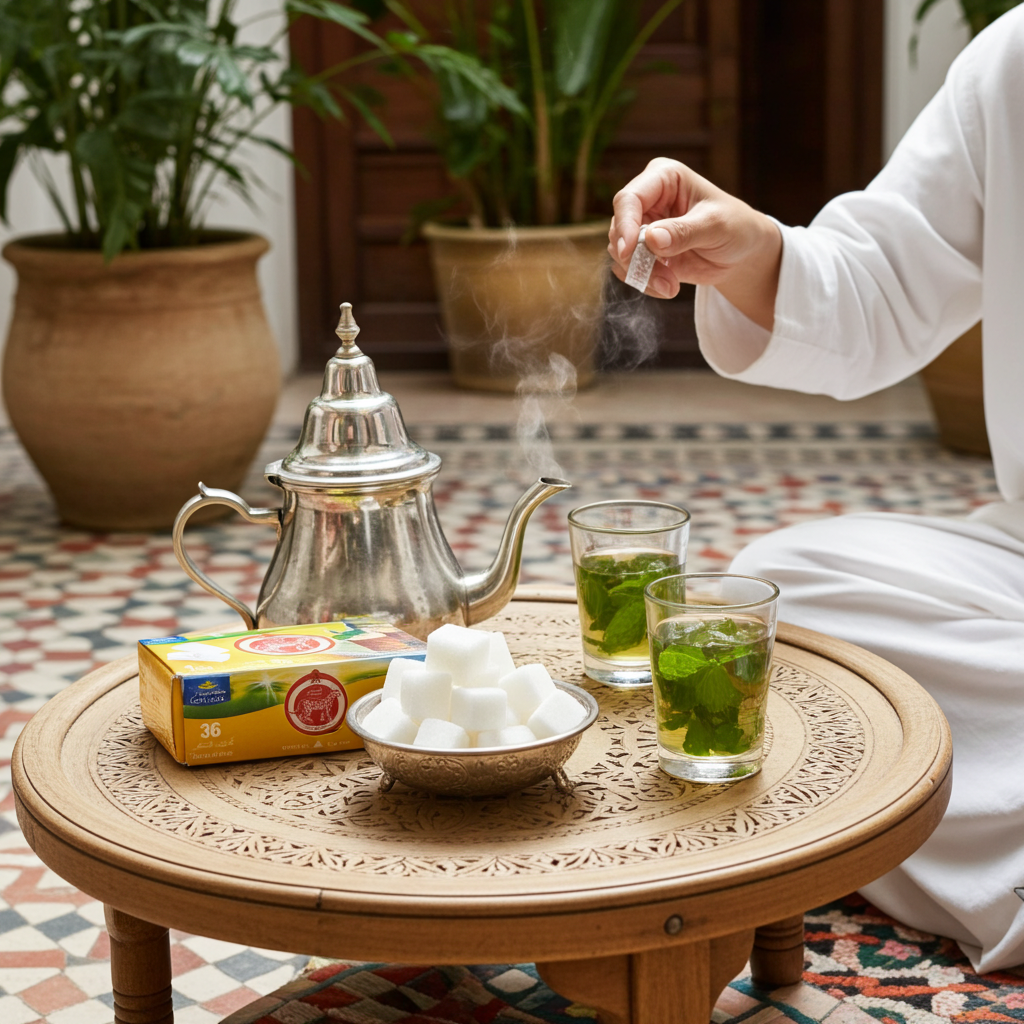
Moroccan tea begins with loose green tea, typically Chinese gunpowder green tea imported from China. Fresh mint, sugar, and sometimes other herbs like verbena or absinthe are added.
The Pour
The tea master—usually the head of the household—takes great care in preparation. The pot is held high above the cup during pouring, creating a beautiful cascading effect that aerates the tea and creates a thin layer of foam.
Presentation
Tea is served in small decorated glasses, often placed on a carved wooden tray. The glasses may be set on decorative coasters, and the presentation is considered an art form in itself.
Etiquette and Customs
The Health Benefits
Beyond tradition, Moroccan tea offers numerous health benefits:
- **Green tea**: Rich in antioxidants, aids digestion - **Fresh mint**: Aids digestion, promotes relaxation, freshens breath - **Sugar**: Provides quick energy (though consumption varies by preference)
Tea Beyond the Ceremony
While formal ceremonies are still performed, Moroccan tea culture extends throughout daily life:
Experience It Yourself
At Cozy Riad Fes, we invite you to experience an authentic Moroccan tea ceremony. Our staff will guide you through this beautiful ritual while you relax in our traditional courtyard, surrounded by the sights and sounds of the medina.
The tea ceremony represents more than refreshment—it's an invitation into the Moroccan way of life, where time slows down, connections deepen, and hospitality becomes an art form.