# Fes Artisans: Preserving Ancient Crafts and Handmade Traditions
In the winding streets of Fes, ancient traditions live on through the hands of skilled artisans. These craftspeople preserve techniques passed down through generations, creating works of extraordinary beauty and function.
Leather Tanning
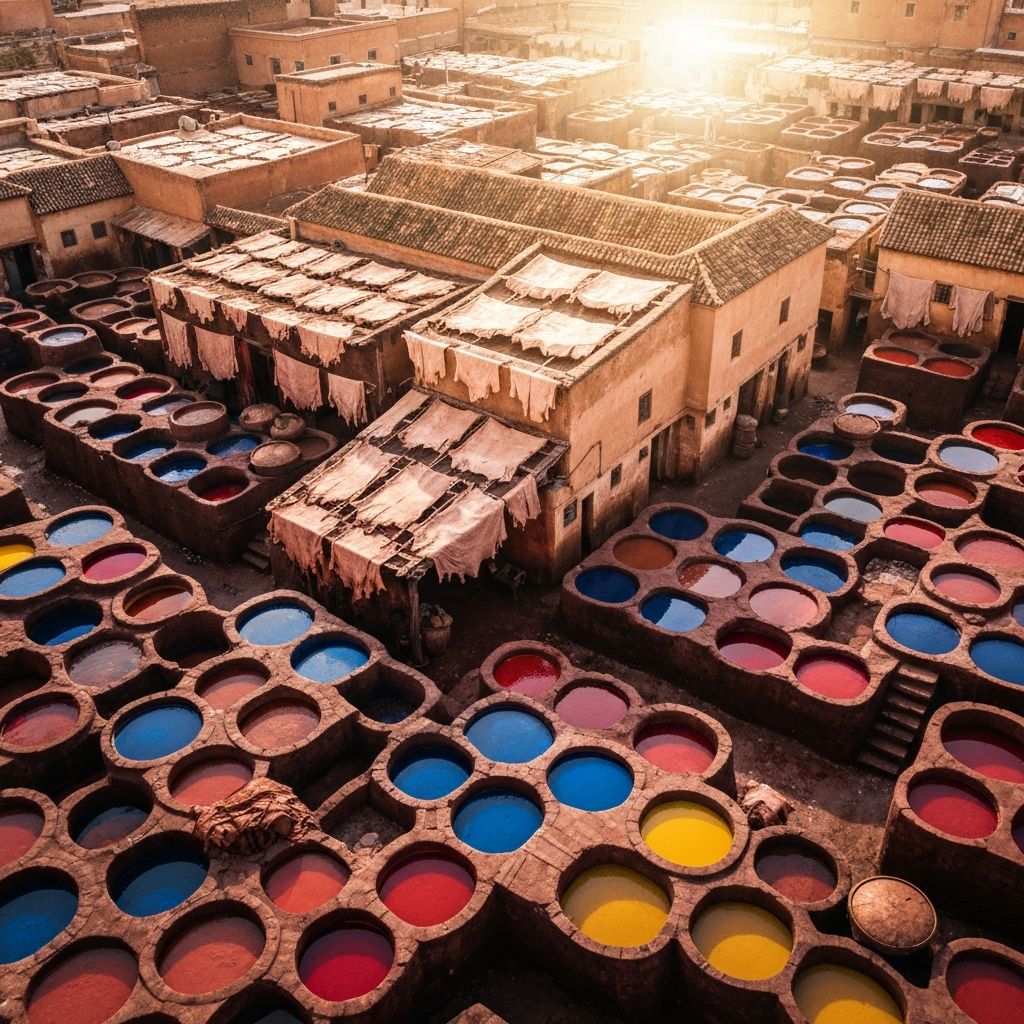
The Chouara Tannery is perhaps Fes's most iconic craft site. Here, workers have used the same methods for over 1,000 years.
The Traditional Process
Natural Dyes
- **Red/Pink**: Derived from poppy flowers - **Blue**: Made from indigo plants - **Yellow**: Created from saffron or pomegranate skins - **Brown**: Produced from walnut shells and oak
The resulting leather is remarkably supple and durable, with natural variations that make each piece unique.
Zellige (Mosaic Tile Work)
Zellige is the Islamic art of creating geometric mosaic tiles from cut and glazed ceramic pieces. The process is incredibly intricate.
Creating Zellige
The resulting designs are hypnotizing—squares, stars, and complex geometric patterns that seem to shift and shimmer.
Embroidery and Textile Arts
Fes is renowned for its golden embroidery, particularly on ceremonial garments and home furnishings.
Techniques
These techniques require years of training and immense patience. A single large piece might take months to complete.
Woodcarving and Cedar Work
The aromatic cedar of the Middle Atlas mountains has long been valued in Fes crafts. Artisans create:
- **Carved ceiling beams**: Intricate geometric patterns - **Ornamental screens**: Jalis (wooden screens) with geometric cutouts - **Decorative boxes**: Inlaid with other woods and mother-of-pearl
The natural fragrance of cedar has made these pieces prized for centuries.
Metalwork
Fes artisans work with copper, brass, and silver to create:
- **Decorative trays**: Often used for serving tea - **Lanterns**: Pierced metalwork that creates beautiful light patterns - **Jewelry**: Intricate pieces combining various metals - **Architectural elements**: Doors, grilles, and railings
Visiting Artisans
Many artisans work in open workshops where visitors can observe the creative process:
Supporting Artisans
When purchasing crafts:
- **Buy directly from makers**: Ensures artisans receive full payment - **Ask about techniques**: Most artisans enjoy explaining their craft - **Understand value**: Handmade items represent hours of skilled labor - **Authentic is premium**: Genuine handmade pieces are more expensive than factory-made imitations
The Challenge of Preservation
Many traditional crafts face challenges in the modern world:
- **Young people pursuing other careers**: Modern education and opportunities compete with traditional apprenticeships - **Tourist demand vs. authenticity**: Commercial pressure can compromise traditional techniques - **Economic pressure**: Artisans struggle with sustainable income
However, growing appreciation for handmade, sustainable goods and cultural tourism is helping revive interest in traditional crafts.
Supporting Fes Crafts
Organizations and initiatives work to preserve these traditions:
- **Apprenticeship programs**: Teaching young people traditional skills - **Fair trade cooperatives**: Ensuring artisans receive fair compensation - **Cultural tourism**: Visitors learning about and purchasing traditional crafts - **Government support**: Recognizing traditional crafts as cultural heritage
Bring Home Tradition
Purchasing Fes crafts means bringing home not just a beautiful object, but a piece of living history. Each item represents skill, tradition, and cultural continuity.
At Cozy Riad Fes, we can connect you with authentic artisans and help you understand the significance of the pieces you encounter. Supporting these craftspeople ensures these beautiful traditions continue for generations to come.