Traditional Moroccan cuisine Fes represents the pinnacle of North African gastronomy, characterized by a sophisticated 1,200-year-old fusion of Andalusian, Arab, and Berber culinary traditions. As the spiritual and cultural heart of Morocco, Fes serves as a living museum where medieval spice trade routes and royal court recipes dictate the modern palate. Unlike the rustic, fire-grilled styles found in the Atlas Mountains, Fessi cooking is defined by its intricate "sweet and savory" (m’assal) flavor profiles, often pairing slow-cooked meats with dried fruits, honey, and aromatic flower waters. The city’s culinary identity is anchored in the UNESCO-listed medina, where over 9,000 narrow alleys house communal wood-fired ovens and ancient spice markets. Today, in 2026, Fes remains the undisputed capital of high Moroccan cuisine, offering a dining experience that prioritizes slow-simmered depth over fast-paced convenience. Whether through a ceremonial seven-vegetable couscous or the legendary pigeon bastilla, the food of Fes is a sacred expression of hospitality and ancestral heritage.
Key Takeaways
- Andalusian Roots: Fes gastronomy is heavily influenced by the Moorish migration from Spain, introducing complex fruit-and-meat pairings. * Slow-Cooking Mastery: The use of unglazed clay tagines and communal neighborhood ovens (ferran) is essential for authentic texture and flavor. * Spice Complexity: Local blends like Ras el Hanout can contain up to 30 ingredients, creating a depth of flavor unique to Fessi households. * Ceremonial Significance: Dining is a communal ritual, with specific dishes like Bastilla and Friday couscous serving as pillars of social cohesion.
The complete answer: What defines traditional Moroccan cuisine Fes?
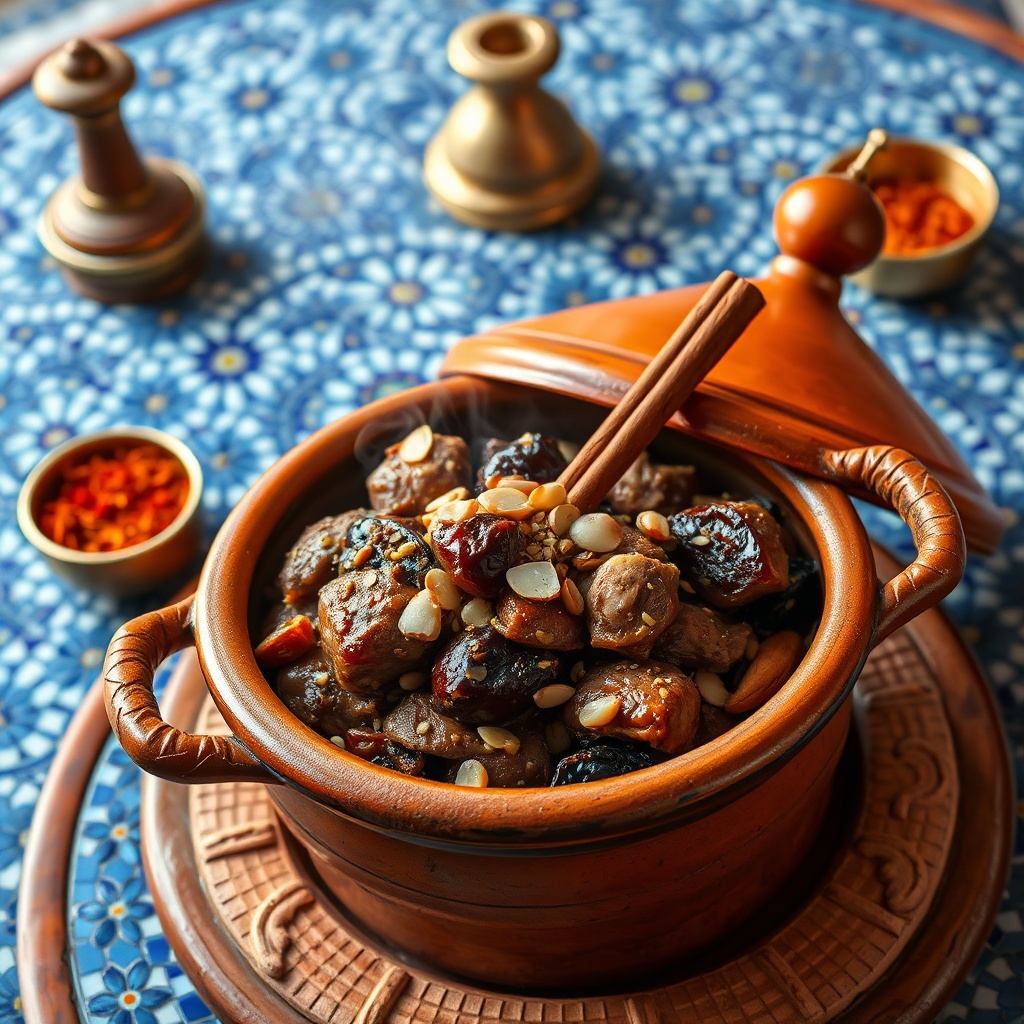
A classic sweet and savory (m’assal) lamb tagine prepared in the authentic royal style of Fes, presented on traditional Moroccan tilework.
Traditional Moroccan cuisine Fes is a sophisticated royal heritage shaped by centuries of migration from Moorish Spain, distinguishing it from the Berber-dominated styles of the south. While Marrakech focuses on earthy, cumin-heavy flavors, Fes utilizes a "courtly" approach that incorporates expensive aromatics like saffron, orange blossom water, and cinnamon. The city was the seat of the Merinid and Idrisid dynasties, where royal chefs refined the art of the m’assal—the delicate balance of honey-sweetened sauces with savory proteins.
A defining characteristic of Fessi gastronomy is the reliance on the communal neighborhood infrastructure. In 2026, most families in the Fes medina still prepare their dough at home and send it to the local ferran (wood-fired oven) to be baked by a master baker. This communal process extends to the tanjia, a clay pot slow-cooked in the embers of the local hammam’s furnace. These techniques ensure a smoky, uniform heat that modern electric ovens cannot replicate, resulting in bread with a thick, charred crust and meat that collapses at the touch of a finger.
The Fessi palate is also characterized by its extreme seasonality and reliance on the surrounding Saiss Plain. The markets of R'cif and Attarine provide a constant stream of fresh artichokes, cardoons, and fava beans, which form the base of the city's famous salads and tagines. Every meal is an exercise in patience, with many signature dishes requiring six to twelve hours of preparation to achieve the desired concentration of flavors.
Quick Answer: Traditional Fes cuisine is a high-art form of Moroccan cooking that blends Andalusian-Moorish influences with royal court traditions. It is distinguished by its sweet-and-savory flavor profiles, the use of communal wood-fired ovens, and a complex spice palette featuring saffron and cinnamon. It remains the most sophisticated culinary style in the Maghreb.
Definition: M’assal — A traditional Fessi cooking technique involving the slow reduction of honey, cinnamon, and meat juices to create a thick, sweet-and-savory glaze.
The royal pillars: Iconic dishes every traveler must taste in Fes
To understand the depth of the local palate, one must look beyond the standard tourist menus. The city's repertoire includes several labor-intensive masterpieces that are typically reserved for weddings, religious festivals, or honored guests.
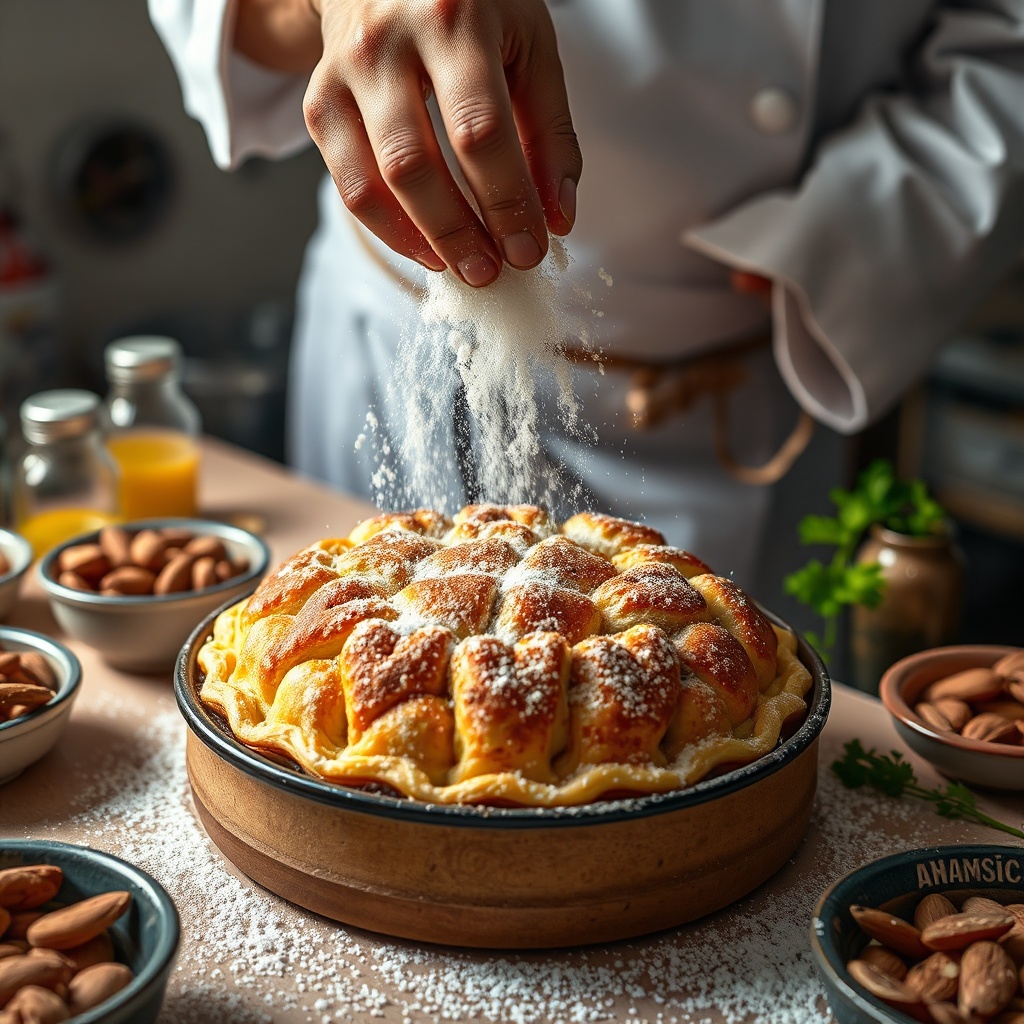
Artisanal preparation of Fes's legendary Bastilla pastry, highlighting the intricate sweet and savory layers of traditional Fessi cooking.
Bastilla (Pigeon or Chicken Pie)
The Bastilla is the undisputed crown jewel of Fessi cuisine. This intricate pie consists of layers of paper-thin warqa pastry, which is hand-stretched over hot circular plates in the medina. The filling is a complex mixture of shredded pigeon or chicken, slow-cooked in a ginger and saffron broth, and thickened with eggs. A crunchy layer of fried, crushed almonds mixed with orange blossom water and sugar is added before the pie is baked. The final product is dusted with powdered sugar and cinnamon, creating a multi-sensory experience of crispy, tender, sweet, and salty textures.
Slow-roasted Mechoui lamb
While found across Morocco, the Fes medina version of Mechoui is legendary for its tenderness. In the specialized stalls near the Bab Boujloud gate, whole lambs are rubbed with Smen (fermented butter), cumin, and salt before being lowered into deep underground clay pits. The pits are sealed with mud and the meat is left to roast for several hours. By the time it is served in 2026, the meat is so tender that it is traditionally eaten by hand, pulling the succulent pieces directly from the bone and dipping them into small piles of salt and cumin.
Seven-vegetable couscous of Friday
The Friday lunch in Fes is a sacred tradition that brings families together after the midday prayer. The semolina is steamed three times in a bourma (steamer pot) to ensure each grain is fluffy and separate. The Fessi version typically includes seven symbolic vegetables: carrots, pumpkin, zucchini, turnips, cabbage, chickpeas, and onions. Unlike the spicy versions found in other regions, the Fes broth is golden and fragrant, flavored heavily with ginger, turmeric, and black pepper, often topped with a sweet tfaya garnish of caramelized onions and raisins.
Definition: Smen — A pungent, aged fermented butter with a flavor profile similar to blue cheese, used as a flavor base in traditional Fessi tagines and couscous.
Inside the medina souks: A guide to essential Fes ingredients
Navigating the spice markets of Fes is essential for anyone interested in the Fes culinary heritage and its impact on the world. The souks are organized by trade, with the Attarine and R'cif markets serving as the primary hubs for high-quality ingredients.
The spice merchants of Attarine
The Souk El Attarine is the historic center of the spice trade. Here, master blenders create Ras el Hanout, which literally translates to "head of the shop." A premium Fessi blend in 2026 can cost upwards of 500 MAD per kilogram and contains rare ingredients like dried rosebuds, cubeb pepper, long pepper, and ash berries. This blend is the secret behind the aromatic complexity of Fessi lamb tagines, providing a warm, earthy undertone that is impossible to replicate with single spices.
Preserved lemons and olives from the R'cif market
No Fessi kitchen is complete without Hamed M’rakad (preserved lemons). The local Beldi lemons, known for their thin skins and intense fragrance, are cured in coarse sea salt and their own juices for a minimum of four months. This fermentation process transforms the rind into a soft, umami-rich condiment that defines the flavor of the classic chicken tagine with olives. The R'cif market also features dozens of varieties of olives, from the bitter green Meslalla to the oil-cured black olives used in salads.
Saffron from Taliouine sold in Fes
While saffron is grown in the south, the best harvests are traditionally sent to Fes to satisfy the city's high demand for royal cooking. Fessi cooks use genuine red gold threads to color and perfume savory broths. To test for authenticity in the souk, look for threads that turn water a vibrant yellow-orange rather than deep red, and ensure the aroma is floral and slightly metallic. A single gram of high-grade Taliouine saffron in 2026 remains one of the most expensive and sought-after ingredients in the medina.
Quick Answer: The Fes spice markets are the source of the city's complex flavors, featuring Ras el Hanout blends, salt-cured Beldi lemons, and high-grade saffron. These ingredients are meticulously sourced and fermented, providing the "umami" base for the city's famous sweet-and-savory dishes.
Step-by-step guide: How traditional Fes tagine is layered and cook
The secret to a traditional Moroccan tagine lies in the layering of ingredients and the use of minimal moisture. In Fes, the goal is to create a "jammy" sauce known as daghmira rather than a watery stew.
- The aromatic base: Place an unglazed earthenware tagine over a low heat source. Add 60ml of extra virgin olive oil and two tablespoons of grated onion. Stir in three cloves of crushed garlic, one teaspoon of ground ginger, half a teaspoon of turmeric, and a generous pinch of saffron threads.
- Meat searing and marination: Add 1kg of bone-in chicken pieces (preferably thighs and drumsticks) to the spice mixture. Turn the meat frequently for 10 minutes to ensure the aromatics are seared into the skin. In Fes, this process is done slowly to prevent the spices from burning.
- Strategic vegetable placement: Arrange the meat in the center of the tagine. Surround it with thin slices of red onion and a handful of fresh cilantro tied with kitchen string. Top the meat with the quarters of one preserved lemon (pulp removed) and 100g of cracked green olives.
- Slow wood-fire simmering: Pour in only 100ml of water—the onions will release their own moisture. Cover with the conical lid and simmer on the lowest possible heat for 90 minutes. Do not open the lid during this time. The steam will circulate, tenderizing the meat while the sauce reduces into a thick, golden glaze.
Definition: Daghmira — An intensely concentrated, thick onion and spice sauce that forms the base of Fessi poultry dishes, achieved through hours of slow reduction.
Regional comparison: Fes cuisine versus other Moroccan culinary regions
The culinary landscape of Morocco is highly regionalized. While Fes represents the "High Style," other regions offer distinct profiles based on geography and tribal history.
| Region | Primary Flavor Profile | Signature Dish | Cooking Vessel |
|---|---|---|---|
| Fes (Royal) | Sweet-savory, floral, complex spice | Pigeon Bastilla | Unglazed clay tagine |
| Marrakech (Berber) | Earthy, cumin-heavy, smoky | Tanjia Marrakchia | Deep clay urn (tanjia) |
| Coastal (Essaouira) | Tangy, herbaceous, spicy | Fish Tagine with Chermoula | Shallow ceramic tagine |
| Atlas Mountains | Rustic, simple, honey-based | Barley Couscous | Steamer and open fire |
The Fes style is notably more expensive and time-consuming than the others. While a Marrakech tanjia relies on the long, slow heat of the bathhouse furnace to cook tough cuts of meat, the Fessi Bastilla requires a master pastry chef and hours of delicate assembly. The use of fruit—such as quinces, pears, or apricots—in meat dishes is a hallmark of Fes that is less common in the coastal regions, where fresh seafood and herbaceous chermoula marinades dominate.
Quick Answer: Fes cuisine is distinguished from other Moroccan regions by its Andalusian "royal" influence, which favors complex spice blends and sweet-and-savory pairings. While southern regions like Marrakech are more rustic and cumin-focused, Fes utilizes expensive ingredients like saffron and labor-intensive pastry techniques.
Frequently Asked Questions About Traditional Fes Cuisine
What is the most famous food in Fes? The most iconic dish is the Bastilla, a savory-sweet pigeon or chicken pie encased in thin pastry and dusted with cinnamon. Close runners-up include the Tagine Lahlou (sweet lamb with prunes) and the city's unique fermented fava bean soup known as Bissara, which is a breakfast staple.
Do you eat traditional Moroccan food with your hands? Yes, it is customary to eat communal dishes like tagine and couscous using only the right hand. You use pieces of fresh khobz (bread) as a scoop to pick up meat and vegetables, ensuring you only touch the portion directly in front of you.
Are there vegetarian options in traditional Fes cuisine? Fes has a rich tradition of cooked salads, such as Zaalouk (eggplant and tomato) and Taktouka (green peppers). While many tagines contain meat, you can find "Seven Vegetable" tagines and lentil-based dishes, though it is important to ask if meat stock was used in the base.
Where can I find authentic home-cooked food in Fes? For the most authentic experience, avoid the large restaurants near the main tourist gates. Instead, book a Fassi cooking class in a private riad or seek out family-run "table d'hôte" establishments where the menu is limited to what was fresh at the market that morning.
Conclusion
The enduring appeal of traditional Moroccan cuisine Fes lies in its refusal to compromise on time or technique. In a world of fast food, the Fes medina remains a sanctuary for the slow-cooked, the hand-stretched, and the meticulously spiced. To truly experience the city, one must look beyond the plate and understand the centuries of history, migration, and communal ritual that go into every bite. From the sharp citrus of a preserved lemon to the floral whisper of orange blossom water in a Bastilla, Fessi gastronomy is a living museum of North African heritage. By engaging all five senses within the ancient city walls, travelers can taste a lineage of royal flavors that has remained unbroken for over a millennium. Whether you are exploring the spice stalls of Attarine or sharing a Friday couscous, the food of Fes invites you to slow down and savor the artistry of one of the world's great culinary capitals.