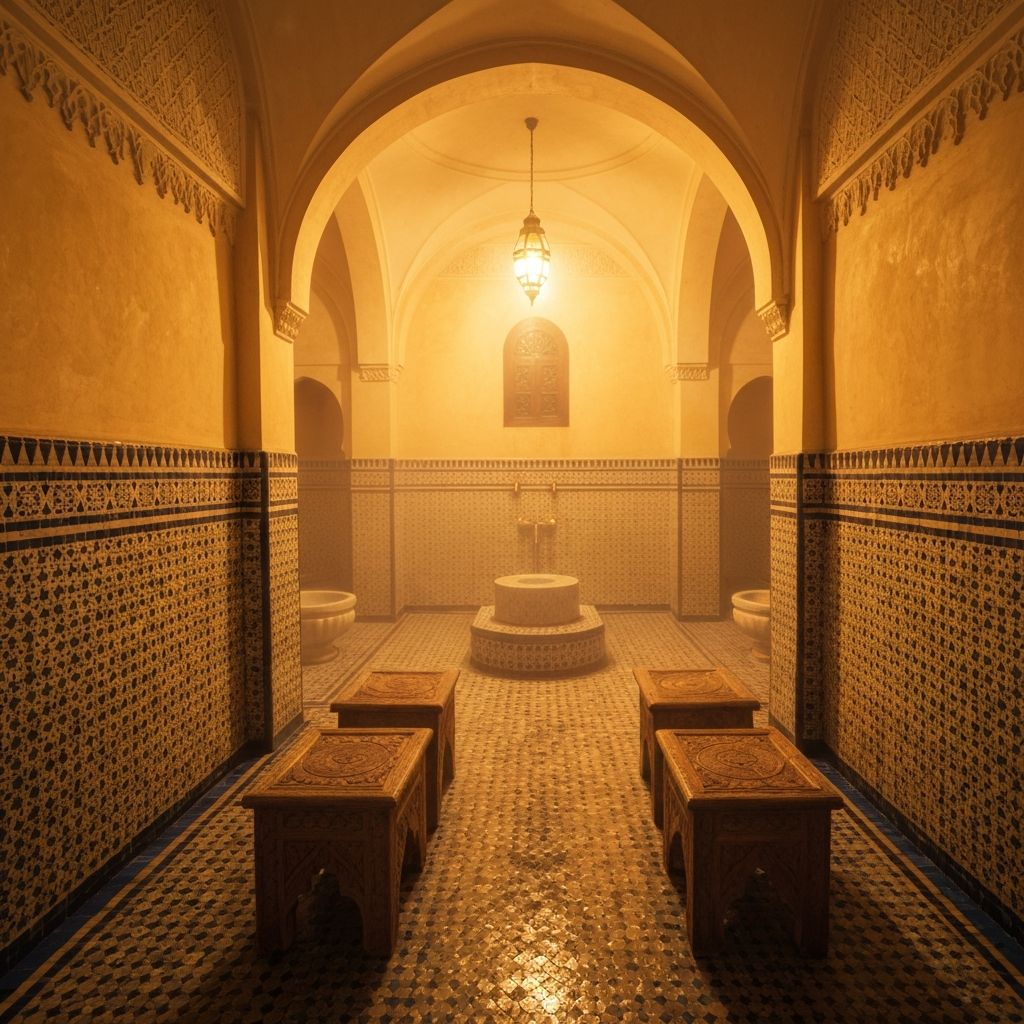
# The Moroccan Hammam: Wellness Tradition and Ritual Bathing
The Moroccan hammam is far more than a place to wash—it's a ritual that has been central to Moroccan culture for centuries. Part spa, part social hub, the hammam combines therapeutic wellness practices with community bonding.
History and Significance
Hammams first appeared in the Islamic world, with their design based on Roman bathhouses. In Morocco, hammams became essential to daily life, particularly in cities where not all homes had access to hot water.
Historically, hammams were divided by gender, with specific times allocated for men, women, and families. This tradition continues in many parts of Morocco today.
The Structure
Traditional hammams consist of three chambers:
The Cool Chamber (Bayt Al-Barrani) The reception area where you undress and relax. This is where you meet your hammam assistant (usually a woman for female clients).
The Warm Chamber (Bayt Al-Wastani) A transition space where your body begins to warm and pores open.
The Hot Chamber (Bayt Al-Sakhin) The main bathing area with a hot stone floor. The steam is generated by hot water running through channels beneath the floor.
The Hammam Experience
Step-by-Step Process
The Benefits
Hammam Etiquette
Timing and Frequency
Preparing for Your Visit
Modern Wellness Practices
While traditional hammams remain popular, many luxury riads now offer private hammam experiences with professional therapists who combine traditional techniques with modern wellness practices like aromatherapy and herbal treatments.
Experience at Cozy Riad Fes
We offer curated hammam experiences that honor tradition while ensuring comfort and relaxation. Our partnerships with authentic local hammams provide access to genuine Moroccan wellness rituals, or for those preferring privacy, we can arrange traditional treatments within our riad.
The hammam represents a beautiful balance of self-care, community, and cultural tradition—an experience that leaves you feeling renewed in body and spirit.